
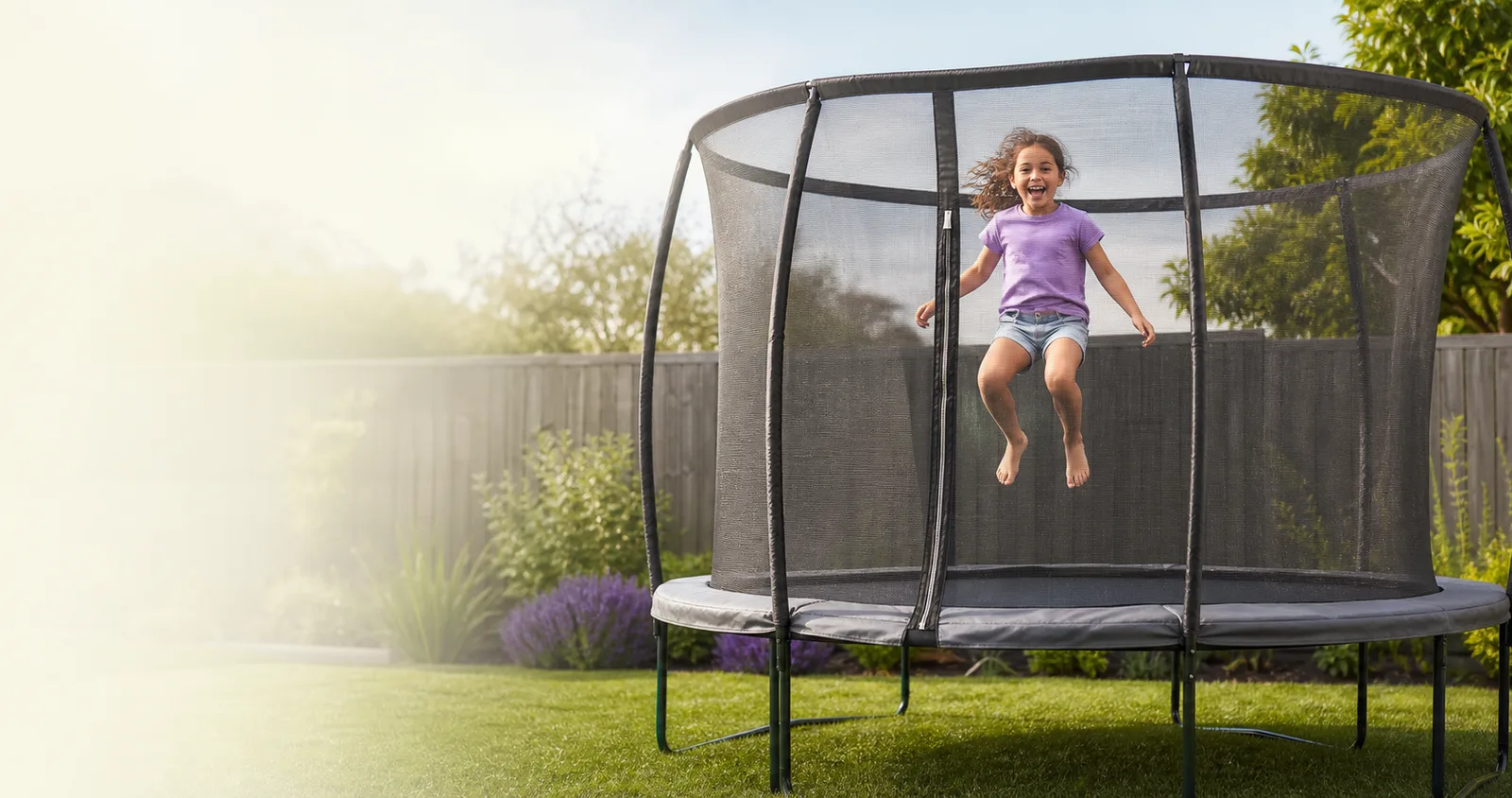
At a glance
Key takeaways
- Follow the manufacturer's minimum age and user guidance.
- A secure enclosure and controlled access matter more than novelty features.
- Choose a size that fits the yard safely and can support future use.
- Simple supervision rules should be agreed before purchase.
- One jumper at a time helps reduce collisions.
What matters most
Start with the intended age range, a fully enclosed jump area, protected hard points and an entry that a supervising adult can check easily. Brand instructions should take priority over generic advice.
- Clear age and weight guidance
- A complete enclosure in good condition
- Padding or soft-edge protection
- Stable access without loose objects nearby
- Replacement parts available for future wear
Planning beyond the first year
A very small junior trampoline may suit a short stage of family life. Compare that with a well-positioned family model that meets current age guidance and can remain useful as children grow.
Set the play rules early
- Adult supervision appropriate to age
- One jumper at a time
- Enclosure closed before bouncing
- No hard toys or objects inside
- Stop when tired or conditions become wet
FAQ
Questions families ask about this topic
What age can a child start using a trampoline?
Follow the specific manufacturer's age guidance for the model. Development, supervision and how the trampoline is used also matter.
Is a smaller trampoline always safer for toddlers?
Not automatically. Enclosure design, age guidance, condition, positioning and supervision are all critical.