
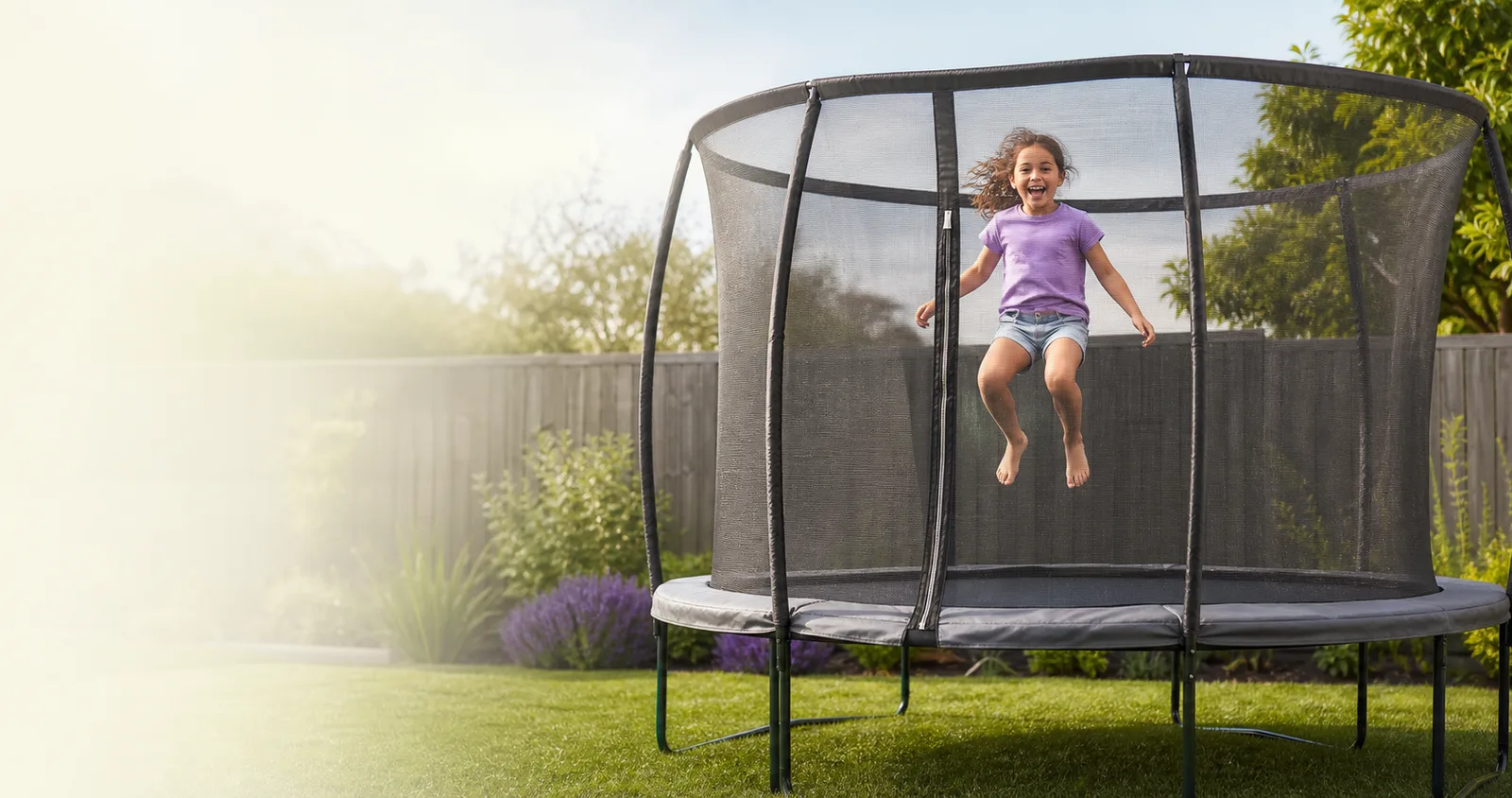
At a glance
Key takeaways
- Inspect the trampoline before the first bounce, not after something feels wrong.
- Keep the landing area clear and maintain safe space around the full frame.
- Replace torn nets, damaged mats and exposed padding before use.
- Check frame joints, legs and anchors after strong weather.
- One jumper at a time remains the simplest way to reduce collisions.
The 60-second check before each use
A quick visual lap catches most obvious issues. Look from ground level first, then check the enclosure opening and the jump surface before anyone climbs in.
- The mat is dry, clear and free from holes or loose stitching.
- The enclosure closes properly and has no reachable tears.
- Padding covers springs, frame edges and hard contact points.
- No toys, branches, furniture or garden tools sit beneath or beside the trampoline.
What to inspect every month
Monthly checks should go beyond the visible surface. Move around the entire frame, test joints by hand and inspect underneath where rust, stretched springs and missing hardware are easier to see.
| Area | Look for | Action |
|---|---|---|
| Frame | Movement, bends or corrosion | Tighten, isolate or assess |
| Mat | UV wear, holes or loose stitching | Replace before further use |
| Net | Tears, failed zip or loose poles | Repair or replace |
| Anchors | Loose straps or lifted stakes | Reset for local ground conditions |
Simple family rules that are easy to remember
FAQ
Questions families ask about this topic
How often should a trampoline be checked?
Do a quick visual check before each use and a more detailed frame, mat, net and anchor inspection every month and after strong weather.
Can children use a trampoline with a small net tear?
A tear can grow quickly and reduce containment. Stop use and repair or replace the net before bouncing resumes.