
At a glance
Key takeaways
- No anchor system makes every trampoline storm-proof.
- Check official weather warnings early.
- Exposure, soil and trampoline shape affect wind risk.
- Remove loose accessories before conditions worsen.
- Pack-down may be the safest option for severe forecasts.
Why trampoline wind risk varies
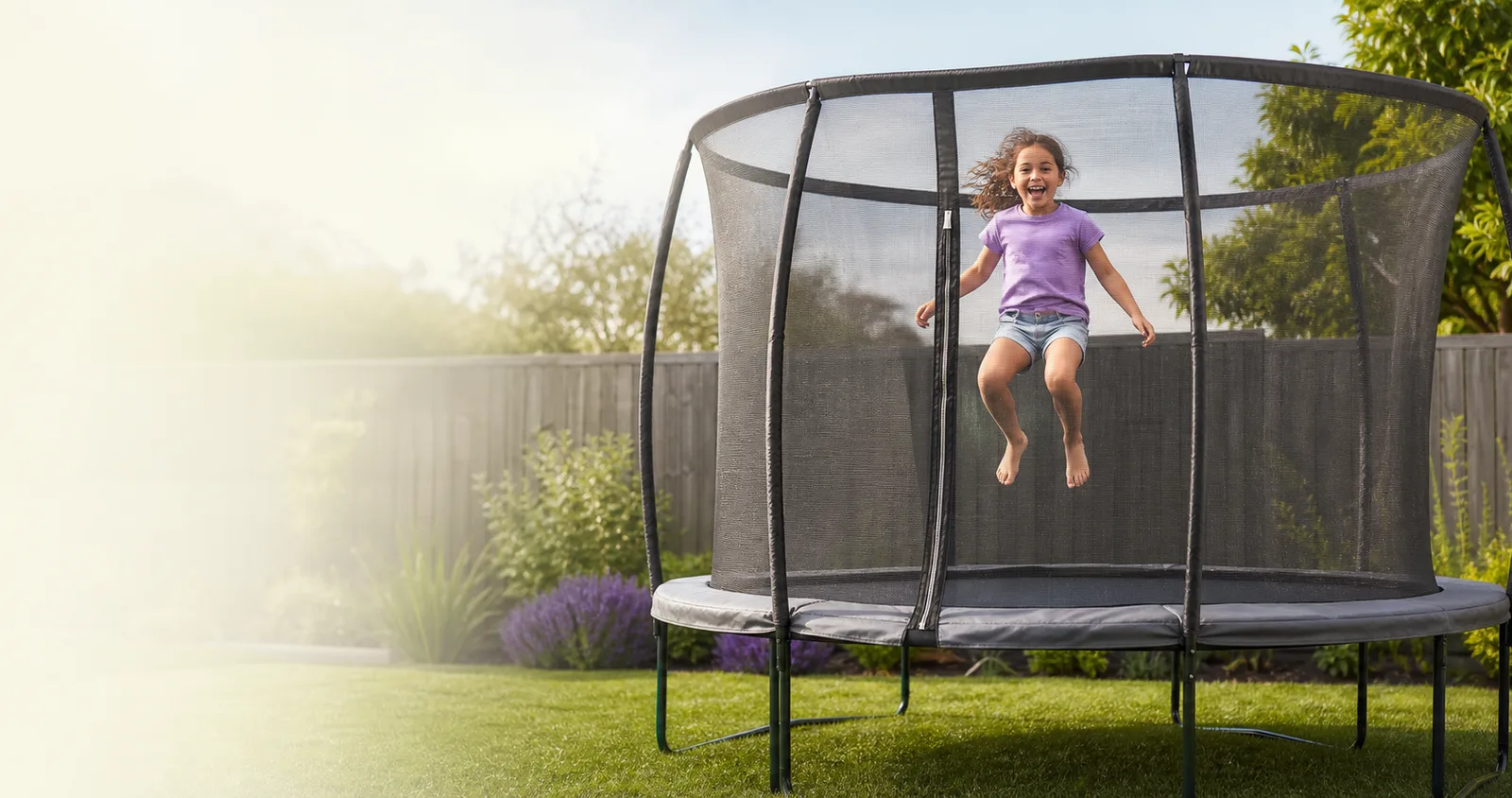
A trampoline can catch wind like a large sail. Risk changes with enclosure area, yard exposure, soil condition, anchors, nearby structures and the forecast strength and direction.
Prepare before the wind arrives
- Check official weather information
- Remove shade covers, tents and loose accessories
- Inspect compatible anchors and straps
- Clear nearby objects that could become airborne
- Arrange disassembly or a safer plan early if exposure is high
Inspect after strong weather
Before use, check leg position, frame alignment, joints, enclosure poles, anchors, mat and net. Movement can loosen hardware or distort components even when the trampoline appears upright.
FAQ
Questions families ask about this topic
Should every trampoline be anchored?
Use the manufacturer's guidance and compatible anchoring system for the model and site. Local exposure and soil conditions also matter.
Should a shade cover stay on during high wind?
Remove loose or wind-catching accessories in line with manufacturer instructions before conditions worsen.